Gamers know that the best part of any great game is exploration: wandering a richly detailed world, uncovering its hidden corners, and collecting rewards along the way. It turns out real life can scratch that same itch, and few cities on Earth do it better than Budapest.
This gorgeous, faded-grand old-European capital, all sweeping boulevards, steaming thermal baths, and atmospheric crumbling backstreets, is basically a sprawling open world begging to be explored. And a food tour is the ultimate exploration run through it: a guided quest that has you collecting the city’s most delicious secrets, from a cavernous market hall to the legendary ruin bars hidden in its old Jewish Quarter. That same pull that makes a great game so appealing, the promise of discovery around every corner, is exactly what Budapest delivers, only with paprika, pálinka, and chimney cake as the loot.
How you experience it depends on your appetite and what you are hungry to discover. A little guidance goes a long way here, because the best spots are rarely the obvious ones.
A few things make a food tour great. Go with a knowledgeable local guide who skips the tourist traps for the real gems, keep the group small, and come genuinely hungry. Here are the best ways to experience it, ranked.
1. Compare and Book It All in One Place
Budapest has market tours, tavern crawls, ruin bar tastings, wine tours, and cooking classes, all with different guides, neighbourhoods, and inclusions. Sorting the good ones from the tourist traps is genuinely tricky. Budapest Food Tours is a platform built around this city’s cuisine, so instead of guessing you get the options laid out clearly by focus, length, and what each includes.
The value is that it matches the experience to your tastes and connects you with local guides who know the hidden gems, so you eat where residents actually eat rather than on an overpriced tourist menu. You can weigh a market-and-tavern tasting tour against a wine or ruin-bar experience, and book with confidence.
You can compare Budapest food tours here and plan before you go, so you spend your time eating rather than researching.
Best for anyone who wants the real flavours without the guesswork. If you already know your plan, book directly.
2. The Central Market Hall: Where the Feast Begins
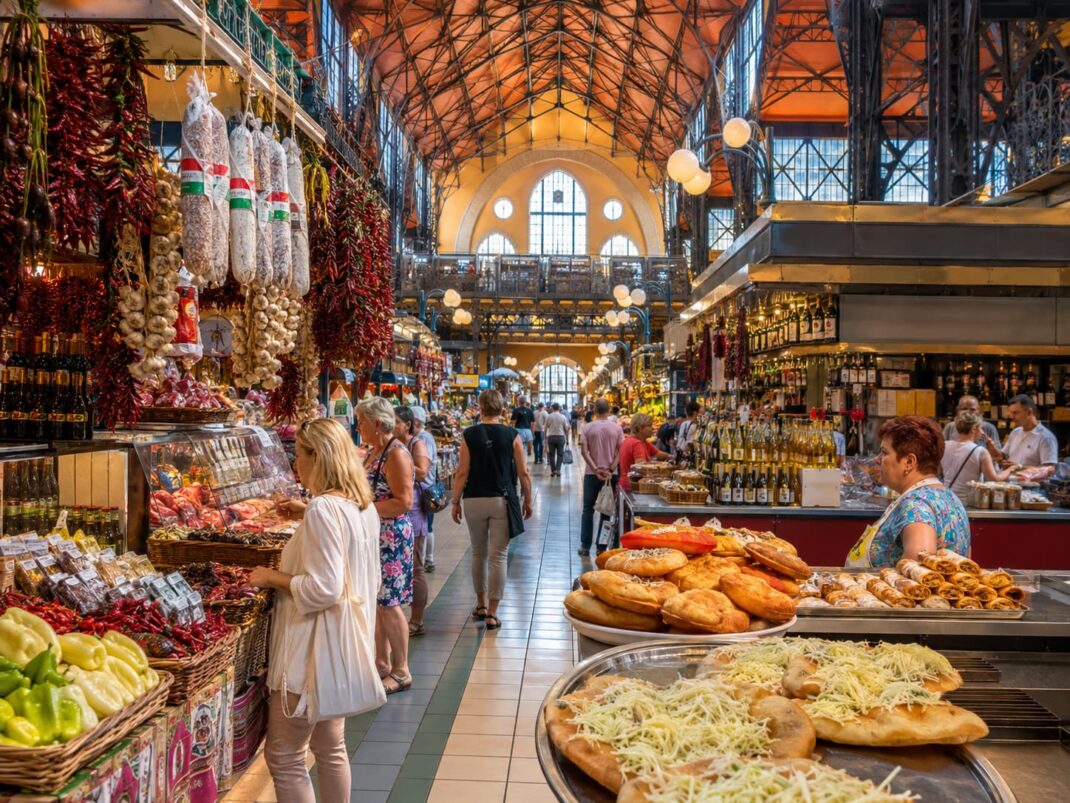
Almost every great Budapest food journey starts here, and for good reason. The Great Market Hall is a magnificent covered market whose ground floor is a working wonderland of Hungarian produce: strings of sweet and hot paprika, Pick salami, foie gras, truffle products, and bottles of golden Tokaji wine. Upstairs, food stalls sizzle with lángos and other quick bites.
It is the perfect first stop, buzzing with atmosphere and packed with the raw ingredients that define Hungarian cooking. A good guide turns a browse into an education in paprika, pickles, and local specialties.
Go early on a weekday for the authentic local experience, and note it is closed on Sundays and public holidays.
Best for first-timers who want to understand Hungarian food from the source.
3. The Classics to Collect: Goulash, Lángos and Chimney Cake
These are the essential flavours every visitor should hunt down. Goulash, the iconic paprika-rich beef soup, is the headline act, alongside creamy chicken paprikash and comforting stuffed cabbage rolls. For street food, nothing beats a hot lángos, deep-fried dough slathered with sour cream, garlic, and cheese. And for dessert, seek out kürtőskalács, the Transylvanian chimney cake spun over hot coals and rolled in cinnamon, best eaten warm.
Working through these is genuinely satisfying, like ticking off a checklist of a country’s greatest hits. Save room for somlói galuska, Hungary’s decadent trifle-like national dessert.
The portions are hearty and rich, so a tour lets you sample many dishes without over-ordering any single one.
Best for foodies who want to taste the definitive Hungarian menu.
4. The Ruin Bars: Budapest’s Hidden Lairs
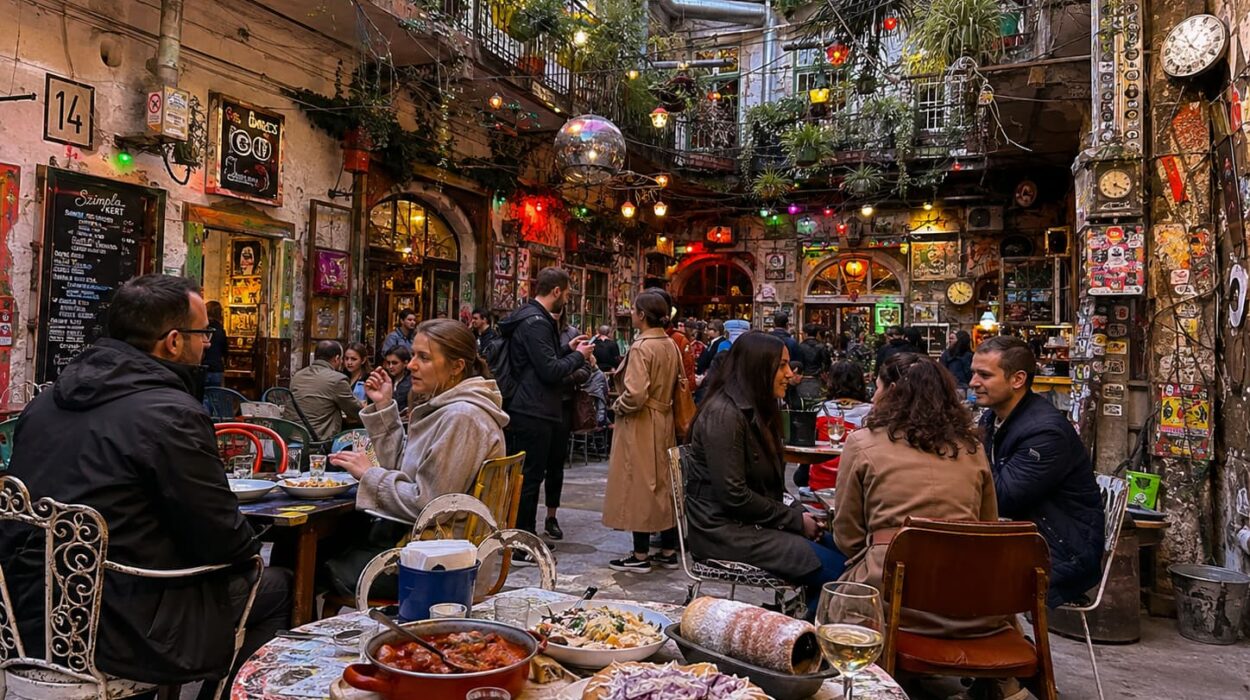
Here is where the exploration gets atmospheric. Budapest’s famous ruin bars are set inside derelict, pre-war buildings in the old Jewish Quarter, and stepping into one is like unraveling a mystery. The original and most iconic, Szimpla Kert, is a former factory that feels less like a bar and more like an immersive art installation, with graffitied walls, vintage furniture, bathtubs for seats, and bicycles hanging from the ceiling. Every room is a surprise.
These are the perfect spot to try Hungarian drinks, from apricot pálinka to Tokaji wine and craft beer, in a setting no game designer could dream up. Early-evening ruin bar tours let you soak up the eerie, eclectic magic before the rowdy late-night crowd arrives.
They get loud and busy after dark, so go early if you want to actually explore the space.
Best for adventurous travelers who love atmosphere and a good drink.
5. Deeper Flavours: Wine, Coffee Houses and the Jewish Quarter
To go deeper, chase Budapest’s richer culinary layers. Hungarian wine deserves attention, from sweet Tokaji to the bold red Egri Bikavér, and the city’s grand historic coffee houses, like the sumptuous New York Café, are worth the splurge for cake and old-world glamour. The Jewish Quarter, meanwhile, is Budapest’s most exciting food neighbourhood, home to Jewish-Hungarian heritage dishes like flódni pastry and cholent.
This is the layer that rewards the curious, revealing the history and cultural depth behind the food. It turns a tasting tour into a genuine cultural exploration.
There is far more here than one visit can cover, so pick the threads that interest you most.
Best for return visitors and travelers who want the story behind the flavours.
A Few Practical Things Before You Go
Come hungry and pace yourself. Hungarian food is hearty, and a good tour packs in eight to fourteen or more tastings across several stops, so eat a light breakfast and wear comfortable shoes for the walking.
Time it flexibly. Budapest’s food scene is a year-round pleasure, cozy and warming in the cold months, when the Christmas markets add mulled wine and chimney cake to the mix, and lovely in the milder spring and autumn. Just remember the Great Market Hall is closed on Sundays. The city centre is compact and walkable, so most food tours cover their stops easily on foot.
Choose a reputable local guide, since the difference between a tourist-trap meal and a hidden-gem feast is enormous here. For planning, the official Visit Hungary site is a great resource, and UNESCO’s listing covers Budapest’s stunning heritage. Both pair well with any related travel guides already on the site.
Choosing the Right One for You
Budapest rewards travelers who explore with an open mind and an empty stomach.
Start by comparing your options through Budapest Food Tours so you find a great local guide and the right experience. Here for the essentials, start at the Central Market Hall and work through the classics. Chasing atmosphere, dive into the ruin bars. Wanting depth, explore the wines, coffee houses, and the Jewish Quarter’s heritage.
However you do it, treat the city like the sprawling, secret-filled world it is. Log off, fly out, and go collect its flavours in person. Some worlds are best explored not with a controller, but with a fork in one hand and a glass of pálinka in the other, and Budapest is one of the most rewarding maps you will ever wander.
Author note: recommendations here are based on Budapest’s established food scene and reputable operators. Prices, opening hours, and tour availability change, so confirm the current details before you go.